Affordable Corn Milling Machines for Sale in the Philippines
Explore affordable corn milling machines for sale in the Philippines. Learn how these machines can support your flour mill investment and improve production efficiency.

Affordable Corn Milling Machines for Sale in the Philippines
Overview Of The Corn Milling Market In The Philippines
The corn milling market in the Philippines has expanded steadily as domestic consumption surpasses 8 million tons per year, and more than 35% of this volume is processed into feed-grade or food-grade milled products. Growing interest in corn milling machine for sale Philippines listings reflects the rising demand among small and medium agricultural processors who aim to supply both regional feed mills and household-level food processors. As part of the broader flour mill market, corn-based milling contributes significantly to rural production, with over 2,000 micro-mills registered nationwide. This growth trend is supported by increasing investments in modern milling equipment and the widening availability of low-cost machines suitable for community-scale operations.
The corn milling demand in the Philippines is driven by two primary regions—Northern Mindanao and Central Luzon—where average corn output exceeds 1.5 million tons annually. Local maize flour processors prefer compact flour milling lines with capacities between 300 kg/h and 1.2 tons/h, which match the purchasing power of rural cooperatives and small enterprises. (Learn more about: small maize flour milling machine)
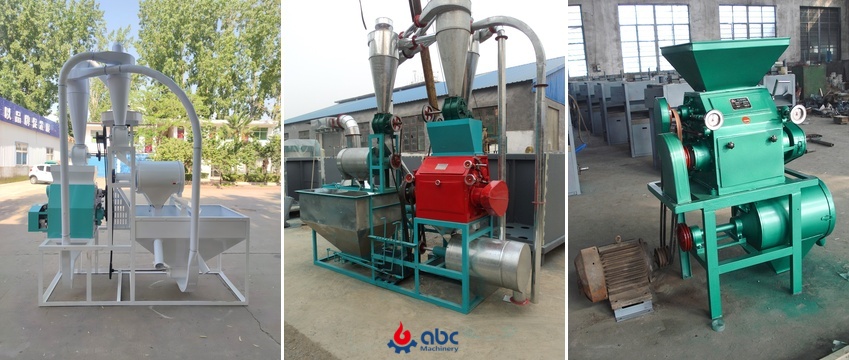
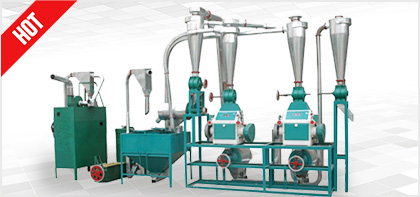
Mini Flour Milling Machine for Sale
Regional corn milling trends in the Philippines indicate an increasing shift toward semi-automated systems with improved energy consumption, typically ranging from 18–25 kWh per ton of output. These machines allow processors to achieve more consistent granulation, improving their competitiveness in supplying feed mills and local food manufacturers. The ongoing integration of community-level processing hubs in provinces such as Bukidnon and Isabela is also shaping the corn milling trends Philippines investors watch closely. Farmers’ cooperatives that once relied on outdated hammer-type units are now switching to combined milling systems featuring destoners, dehullers, and sieve classifiers, increasing product quality by 15–20%.
It is clear that the corn milling market in Philippines continues to expand due to stable raw material availability and rising downstream industrial demand. Strengthen your market entry strategy with maize flour processing equipment engineered for Philippine conditions—contact our technical team to design your optimized corn milling setup today.

Drivers Of Low-Cost Corn Milling Solutions Demand
Economic Pressures Shaping Purchasing Decisions
Demand for low-cost milling solutions in the Philippines is strongly influenced by the operational constraints of small and medium enterprises (SMEs), which make up over 70% of the country’s milling sector. Many processors operate with monthly budgets below USD 12,000, making the search for affordable milling machines Philippines a priority when evaluating new investments. Energy costs remain one of the sector’s biggest challenges, with average electricity prices reaching USD 0.18 per kWh, pushing buyers toward machines that can reduce power consumption by 10–20% per ton. These economic pressures accelerate the transition from outdated single-function grinders to integrated compact mills that offer higher throughput at a lower total cost of ownership.
Shift Toward Technically Efficient Systems
The adoption of more modern milling solutions is driven by visible improvements in accuracy and consistency. Machines equipped with sensors such as NIR (Near-Infrared Reflectance) analyzers or MES (Manufacturing Execution System) modules can enhance batch uniformity by 15–25% while tracking losses to below 1.8%. Buyers increasingly compare performance benchmarks across different capacity ranges—typically between 400 kg/h and 2 tons/h—to ensure that the machine’s technical profile aligns with their production targets. These upgrades follow broader milling technology trends that emphasize integrated dehulling, grading, and fine-grinding capabilities in a single footprint.
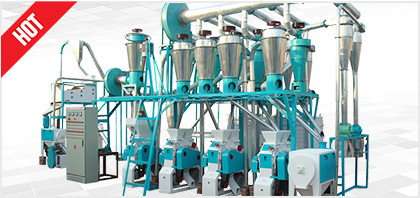
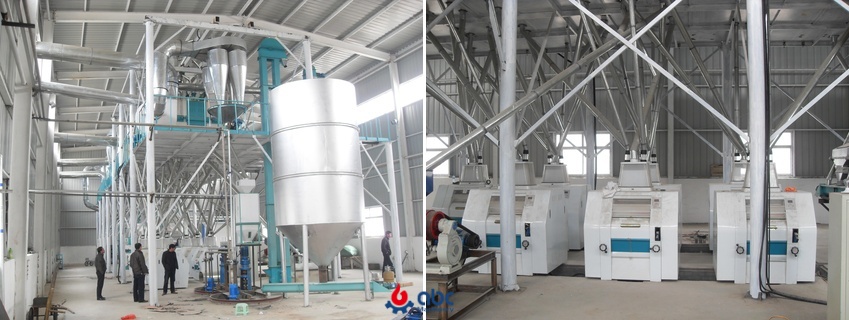 Turnkey Automatic Flour Mill Plant
Role Of SMEs And Regional Processing Centers
SMEs located in Mindanao, Visayas, and Central Luzon account for more than 2,500 active community-scale mills. Their preference for compact units is shaped by limited land area, commonly ranging from 30–80 m², which restricts installation space. Local cooperatives frequently choose models that can support diverse product outputs including meal, grits, and fine flour. These purchasing behaviors reinforce the broader movement toward equipment aligned with the milling technology trends currently reshaping regional supply chains.
Key Drivers Summarized
- Economic Constraints:Capital limitations encourage the adoption of compact and efficient machinery.
- Energy Reduction Targets:Stable operation with lower kWh/ton improves profit margins.
- Technology Integration:Modern sensing and automation tools reduce waste and enhance product quality.
- SME Market Expansion:Growing micro-processor demand sustains machine sales volume.
- Regional Production Growth:Provinces with over 500,000 tons of annual corn output increasingly require scalable milling units.
Choosing the correct corn milling equipment determines throughput, product quality, and lifecycle cost. Typical small-to-medium processors target capacities between 300 kg/h and 2 tons/h, while mid-sized contract mills aim for 3–10 tons/h. When evaluating options, compare upfront price, expected energy consumption (kWh/ton), and mean time between failures (MTBF) in hours—these three metrics often explain 60–75% of the total cost of ownership over a 5–7 year horizon. Prioritize machines that deliver stable particle size distribution and less than 2% processing loss under nominal feed conditions.
Capacity And Throughput Considerations
Determine immediate and 3–5 year growth targets. A compact integrated mini-line rated at 1 ton/h can usually be upgraded modularly to 1.5–2 tons/h by adding a secondary grinder or improved sieving system. For contract milling where uptime expectations exceed 95%, choose equipment with larger bearings, service-friendly housings, and spare-part availability within 2–4 weeks.
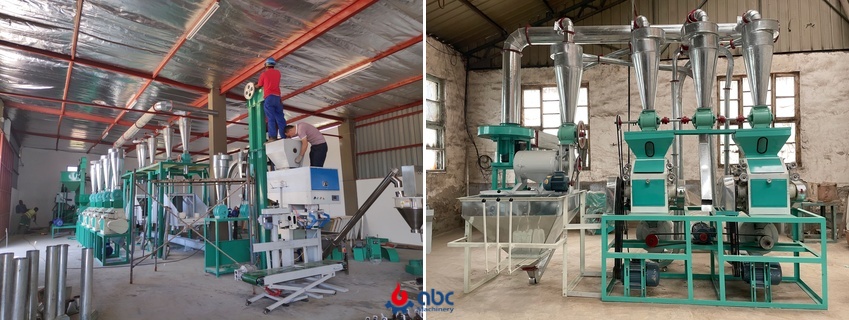
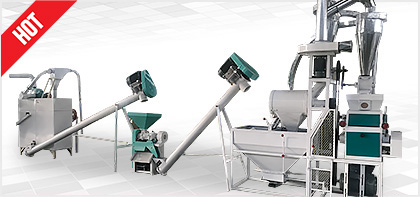
Expandable Corn Flour Milling Plant
Energy And Maintenance Metrics
Energy is a recurring cost: aim for machines with 14–20 kWh/ton for integrated lines and 16–24 kWh/ton for multi-stage setups. Maintenance intervals of 400–800 operating hours for bearings and 1,200–2,000 hours for drive belts are typical benchmarks — shorter intervals increase labor and downtime. Incorporate remote-monitoring readiness (MODBUS/IoT) to reduce mean time to repair by an estimated 20–30%.
Corn milling machine comparison should include at least these quantitative checks:
- Throughput: rated vs. tested (kg/h or t/h).
- Energy usage: kWh/ton under full-load.
- Product quality: particle size distribution, % fines, and bulk density.
- Machine Footprint: Space required (m²) and ceiling height, e.g., 40–80 m² and ≥4.5 m for compact lines.
- Spare Parts Lead Time: Local stock vs. import (days).
- Warranty & Service: Length (months) and coverage (parts vs. labor).
| Selection Factor | Recommended Benchmark | Why It Matters |
|---|---|---|
| Rated Capacity | Match 60–80% of peak demand | Reduces idle periods and scaling costs |
| Energy Use | 14–22 kWh/ton | Directly affects per-ton cost |
| Maintenance Interval | ≥400 hours for routine checks | Lowers unplanned downtime |
When assessing ROI for milling machines, calculate payback using realistic throughput (tons/day), average gross margin per ton (USD), and full operating cost (energy + labor + consumables). For procurement, request a factory acceptance report, energy consumption curve, and at least 3 client references in similar climatic conditions.
Discuss your target capacity, local electricity tariffs, and product spec with our engineers to receive a tailored machine comparison and ROI projection within 5 business days.
Investment Opportunities In The Philippine Flour Mill Market
The Philippine market shows steady demand for localized milling: domestic corn and flour consumption represents an addressable market of several million tons annually, with regional processing hubs driving investment interest. Growth areas include feed-grade flour for aquaculture and value-added corn grits for food processors, where processors can expect margin uplifts of 10–18% by integrating a modern milling line.
For investors exploring flour mill investment Philippines, consider modular mini-plants with 0.5–2 tons/day output as low-entry capital options. These setups can achieve positive cash flow within 12–30 months when paired with secure offtake or cooperative networks. To evaluate market fit, model scenarios for 1-year, 3-year, and 5-year demand growth and confirm access to raw corn supply within a 50–150 km radius.
Contact our project team to obtain a project-level financial model and feasibility checklist tailored to Philippine conditions.
You may be interested in:We receive enquiries in English, Español (Spanish), Русский язык (Russian), Français (French) and العربية (Arabic). Our professional team will reply to you within one business day. Please feel FREE to contact us!