Designing Profitable Maize Milling Plants in Uganda
Assess the growing demand for maize milling in Uganda, explore efficient plant design and equipment selection, and understand investment costs and ROI potential for profitable operations.

Designing Profitable Maize Milling Plants in Uganda
Uganda Maize Processing Market Demand And Investment Drivers
The flour mill market in Uganda is experiencing accelerated growth driven by rising domestic maize consumption and regional demand. Uganda produced approximately 3.6 million metric tons of maize in 2023, representing a 4.5% increase over 2022. East Africa's grain market trends indicate a steady 5–6% annual increase in maize flour consumption across Kenya, Tanzania, and Uganda. The national government has prioritized agro-industrial development, integrating maize milling into policies for food security and value-added processing.
Policy And Infrastructure Factors
- Government Incentives: Tax breaks and import duty reductions of 10–15% for locally assembled milling equipment.
- Energy Access: National grid coverage now exceeds 70%, with supplementary solar or biomass options reducing operational risk.
- Transport Networks: Key maize-growing regions are within 150–300 km of major milling hubs, lowering logistics costs by up to 20%.
Investment Potential And Market Growth
- Small and medium-sized flour mills account for nearly 65% of new maize milling operations, indicating strong opportunities for affordable, scalable plants. (Learn more about: small maize flour milling machine)
- Commercial plants with capacities of 5–20 tons/day achieve payback periods of 2.5–4 years under average local maize prices of USD 220–270 per ton.
- Emerging product trends include fortified maize flour and instant maize meal, opening potential revenue streams.
Investors can leverage these growth dynamics by establishing well-designed maize milling plants in Uganda that align with local consumption and export potential.
Investment Analysis Table
| Factor | Impact | Data / Metric |
|---|---|---|
| Local Maize Supply | High | 3.6M tons (2023) |
| SME Market Share | Medium | 65% of new operations |
| Payback Period | High | 2.5–4 years for 5–20 t/day plants |
| Energy Access | Medium | 70% grid coverage |
| Transport Efficiency | Medium | Logistics cost savings 20% |
- Production Flexibility: Plants capable of processing both yellow and white maize varieties optimize year-round operations.
- Automation Opportunities: Integration of NIR (Near-Infrared Reflectance) sensors ensures consistent flour moisture and protein content, improving quality and reducing rework by 10–12%.
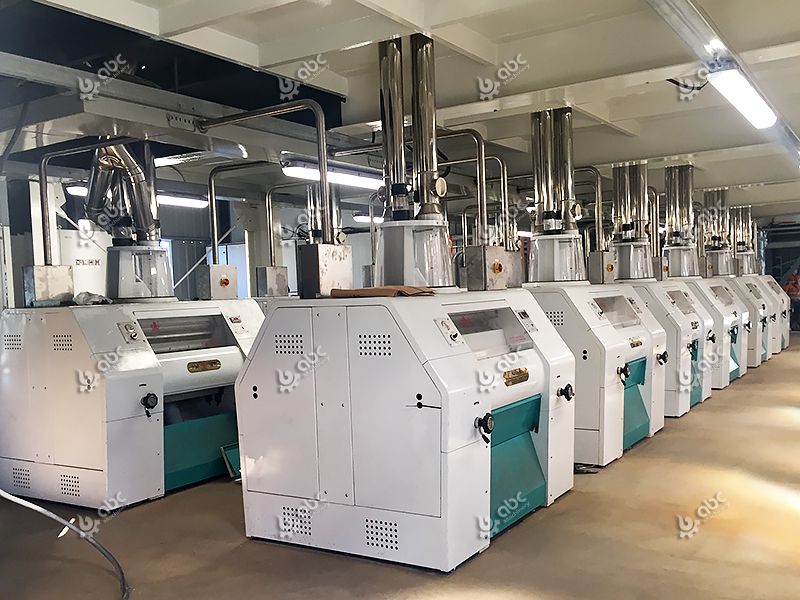
Inside view of the Large Automated Flour Mill
Engage with our experts to identify high-potential maize milling investments in Uganda that maximize operational efficiency and ROI.

Maize Milling Plant Design: Process Flow And Equipment Configuration
Designing a maize milling plant in Uganda requires aligning capacity with market demand while ensuring cost-effective and stable operations. Plants typically range from 1 tons/day for community mills to 20 tons/day for commercial operations. Essential considerations include raw material cleaning, degerming, grinding, sieving, and packaging stages. ( Learn more about: wheat processing steps guide )
Equipment Selection And Automation
- Hammer Mills vs Roller Mills: Hammer mills are suitable for 5–10 t/day capacities with power consumption around 90–120 kWh/day, whereas roller mills serve 15–20 t/day with 300–350 kWh/day.
- Material Handling Systems: Bucket elevators, screw conveyors, and automated dosing improve throughput by 15–18%.
- Control Systems: MES (Manufacturing Execution System) integration supports real-time monitoring of production metrics.
Process Flow Overview Table
| Process Stage | Key Equipment | Performance Indicator |
|---|---|---|
| Cleaning | Destoner, Aspirator | 98% impurity removal |
| Degerming | Degerminator | 90–95% germ separation |
| Grinding | Hammer / Roller Mill | 5–20 t/day output |
| Sieving | Plansifter | Flour fineness 0.15–0.25 mm |
| Packaging | Bagging Machine | 50–100 bags/hour |
- Plants should include automated weighing and mixing to maintain uniform product quality.
- Layout optimization minimizes material handling distances, reducing energy use by up to 12%. Modular designs enable future capacity expansion with minimal downtime.
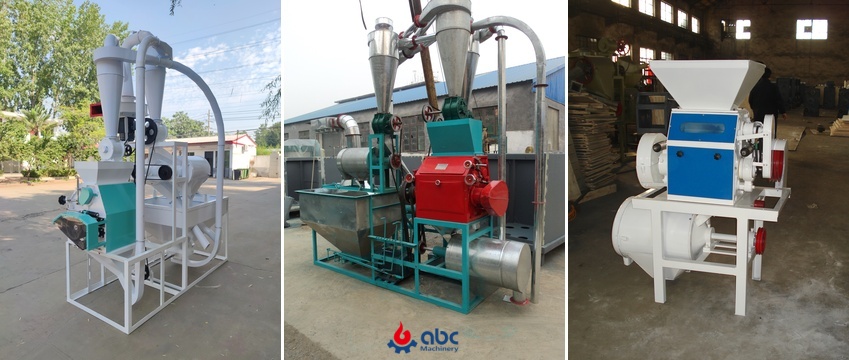
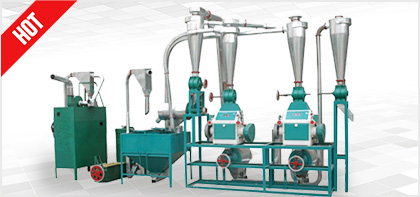
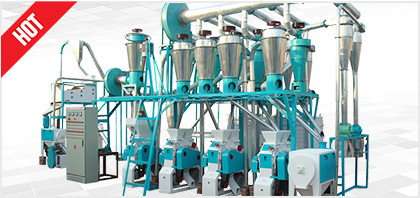
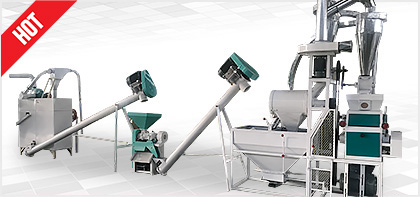
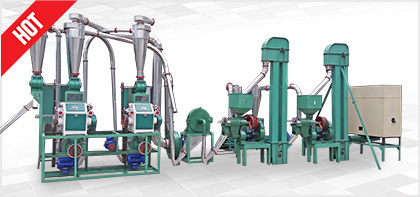
Small Maize Flour Milling Plant at Factory Price
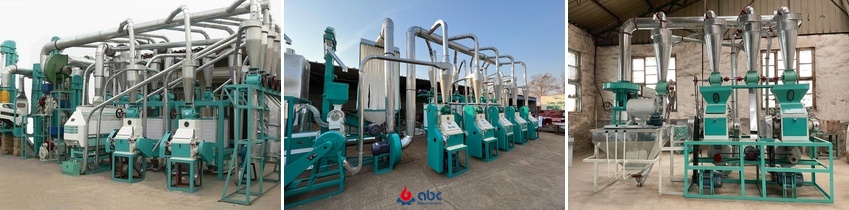
Scalable Corn Flour Mills for Sale
Request a tailored plant layout and equipment specification to ensure smooth operation and optimal performance for your Ugandan maize milling project.
Investment Cost Structure And ROI Estimation Path
Understanding the cost structure and ROI is crucial for maize milling investments. CAPEX typically includes equipment, civil works, electrical systems, and installation, ranging from USD 120,000 for small 5 t/day plants to USD 450,000 for 20 t/day commercial plants. OPEX encompasses labor, energy, maintenance, and spare parts, with annual operating costs around USD 35,000–80,000 depending on plant size.
Capital And Operating Costs Breakdown
- Equipment: 50–60% of total CAPEX
- Civil Construction: 15–20%
- Electrical & Utilities: 10–15%
- Installation & Commissioning: 5–10%
Investors should calculate ROI using product mix, processing fees, and local maize costs. Sensitivity analysis indicates that a 5% increase in maize price improves ROI by 8–10%, while energy efficiency improvements of 15% reduce OPEX significantly.
Profitability Modeling And Payback
-
Average maize flour selling price: USD 270–300/ton
-
Small plant (5 t/day): Payback ~3–3.5 years
-
Commercial plant (20 t/day): Payback ~2.5–3 years
-
Service operations (custom milling): Generate additional 15–20% revenue
-
Operational Efficiency: Reducing downtime by 10% through preventive maintenance increases annual throughput by ~200–300 tons.
-
Product Diversification: Introducing fortified maize flour can boost revenue by 12–15%. Careful CAPEX and OPEX planning ensures a sustainable return on investment for Ugandan maize milling operations.
Contact our team to model your maize milling plant ROI and optimize cost structures for maximum profitability in Uganda.
You may be interested in:- flour mill plant construction
- PLC-System for flour mill plant
- 40TPD maize mill machine delivered Uganda
We receive enquiries in English, Español (Spanish), Русский язык (Russian), Français (French) and العربية (Arabic). Our professional team will reply to you within one business day. Please feel FREE to contact us!