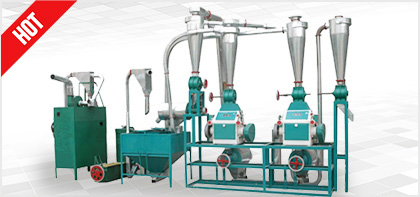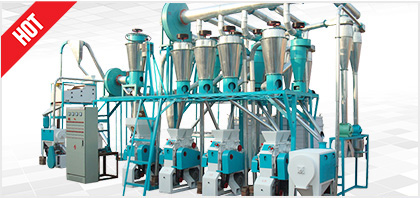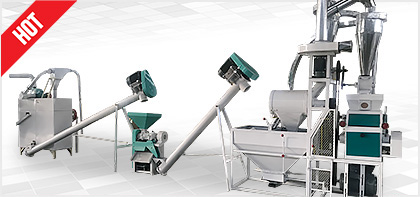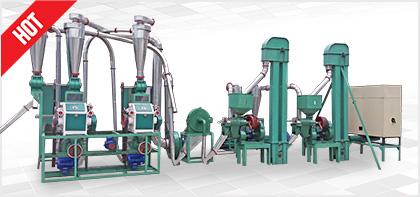
40 TPD Flour Milling Equipment
A 40 TPD flour mill plant processes 40 tonnes of raw wheat per 24 hours. That figure describes wheat intake, not flour output: at an extraction rate of 72% to 76%, a complete flour milling plant of this size yields roughly 29 to 30 tonnes of flour a day, with bran as the balance. The distinction matters because the most common error in an enquiry is a line sized for 40 tonnes of flour rather than 40 tonnes of wheat.
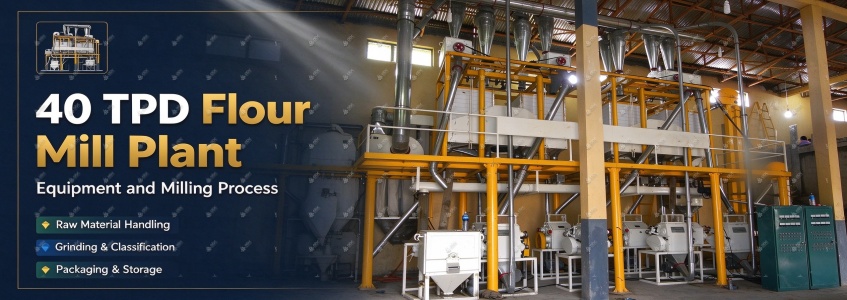
The standard flour mill process is 4B4M1S, four break passages, four reduction passages and one sizing passage, nine grinding stages arranged for gravity flow so that stock moves between floors without pneumatic lifting. The line is built from five modules: cleaning, milling, packing and bran handling, dust collection, and electrical control. A complete wheat flour line is the sum of all five.At this capacity the equipment suits three kinds of buyer: township processing plants, grain cooperatives, and procurement inside a larger EPC project. The sections below follow the five modules in process order.
1. Equipment List for a 40 TPD Flour Mill Plant
1.1 Cleaning and Conditioning (Impurity Removal and Tempering)
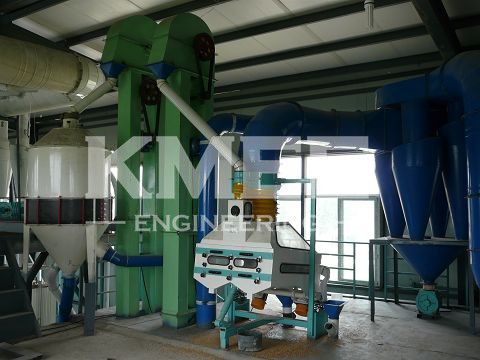
The cleaning section sets the ceiling for everything downstream, which is why the specification of wheat flour machinery is decided here rather than at the mill.
Table 1 Cleaning and conditioning equipment
|
Equipment |
Function |
Key parameters (40 TPD) |
Qty |
|---|---|---|---|
| Vibrating pre-cleaner | Removes straw, large and light impurities | Rated at 1.2 to 1.5 times milling capacity, two decks | 1 |
| Gravity destoner | Removes stones of similar density to wheat | 1.5 to 2.5 t/h, 2 x 0.25 kW | 1 |
| Scourer | Removes bran hairs, surface dirt and some damaged kernels | Adjustable intensity, broken kernel rate monitored | 1 |
| Magnetic separator | Removes ferrous material ahead of the rolls | Two positions, after scouring and before the mill | 2 |
| Tempering bins | 18 to 24 hours conditioning, moisture control | Two bins on rotation, 8 to 12 hours capacity each | 2 |
| Elevators, airlocks, feeders | Product lifting and flow control | Interlocked with the main machines | Set |
The gravity destoner is the one item that cannot be dropped from a flour mill machine list. Stones of near-wheat density pass a vibrating screen untouched and are separated only by specific gravity, and the saving from omitting the destoner rarely covers a single roll reconditioning.
1.2 Milling Section (4B4M1S)
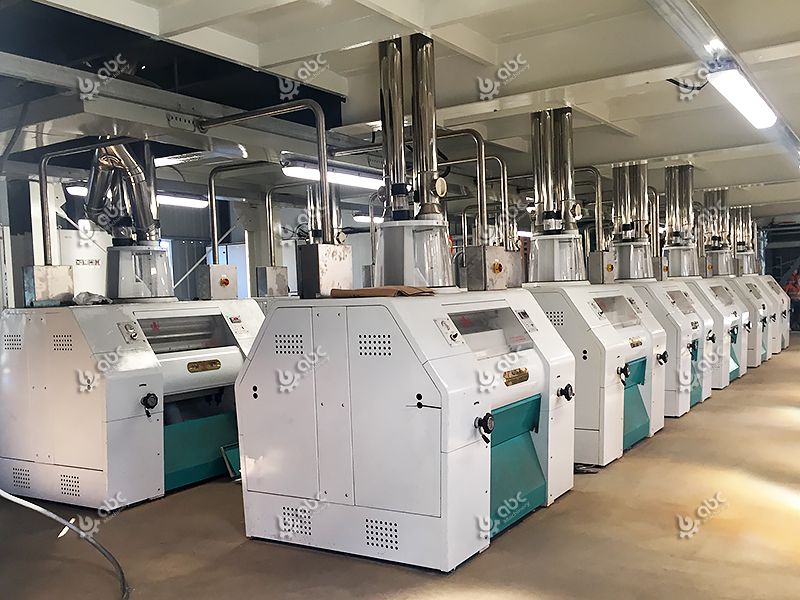
The roller flour mill carries the whole 4B4M1S diagram. Break rolls open the kernel and release flour, reduction rolls grind the intermediate stock, and the sizing passage handles the branny material; the three duties use different roll chills and gaps and are not interchangeable. A 40 TPD wheat flour milling machine normally runs 7 to 8 units, with the final count set by the number of passages and the total roll length.
Table 2 Milling section
|
Equipment |
Function |
Configuration (40 TPD) |
Qty |
|---|---|---|---|
| Roller mill | Four break, four reduction, one sizing passage | Gaps set per passage, coarse on break, fine on reduction | 7 to 8 |
| Double-bin plansifter | Grading and flour release | Sifting area matched to roll output, run in parallel | 2 to 3 |
| Bran finisher | Recovers flour still adhering to bran | Raises extraction, lowers flour in bran | 1 to 2 |
| Purifier (optional) | Classifies intermediate stock by quality | High-spec only, influences premium flour yield | As required |
The efficiency of break and reduction separation depends on how the plansifter matches the flour roller mill. An undersized sifter cannot keep up with the mill and forces a lower grinding rate; an oversized one over-sifts and returns fine stock to the rolls.
1.3 Packing and Bran Handling
The automatic packing scale sets the tempo of this section. A flour milling machine running at full rate with packing that cannot keep up ships only what the bagger handles, which is a common hidden bottleneck on a line of this size.
Table 3 Packing and bran handling
|
Equipment |
Function |
Parameters |
Note |
|---|---|---|---|
| Flour collecting screw | Gathers flour from the bins to packing | Rated for 2.0 t/h | Avoid long horizontal runs |
| Blending bins (optional) | Multi-bin blending, stable batches | 2 to 3 bins depending on product range | Required for multiple grades |
| Net weighing scale | Accurate filling and closing | 25 kg bags, capacity above mill output | Keep 20% headroom |
| Bran screw | Transfers bran to storage | Separate route from flour | Prevents cross contamination |
| Bran storage bin | Buffer and loading | One to two days of output | Bulk or bagged |

1.4 Dust Collection and Auxiliary Conveying
A bag filter in this class of flour mill machinery is not only an environmental device. It maintains negative pressure in the workshop and keeps dust concentration down, which makes it the first measure in dust explosion protection. The ducting is as important as the machines, because leakage is the most frequent failure reported on lines of this size.
-
Pulse jet bag filter, explosion-protected. Sized on the number of pickup points and total air volume, with explosion vents and antistatic bags.
-
Fan and ducting. Avoid long horizontal runs and use large radius bends to prevent dust settling.
-
Negative pressure. The workshop runs slightly negative so dust does not escape; pickup points cover intake, cleaning, milling and packing.
-
Spouting and pneumatic lines. Spouting at 55 degrees or steeper; pneumatic conveying only for short runs that will not flow by gravity.
-
Airlocks. Mandatory between filter and bin; leakage here collapses collection efficiency.
Duct leakage does not stop the plant. It appears two or three months later as falling cleaning efficiency and visible dust in the workshop. Checking each run with a smoke test or anemometer at handover costs far less than correcting it in production.
1.5 Electrical, Control and Laboratory
The PLC cabinet holds the interlock sequence: start from the far end forwards, stop from the front backwards, and any blockage must stop the upstream section immediately. On a wheat flour mill machine of this size the logic is fixed at design stage, not tuned on site.
-
PLC cabinet. Circuits grouped by section, emergency stop and interlocks, interface reserved for central control.
-
Distribution cabinet. Sized for 80 to 90 kW installed power with 15% to 20% headroom.
-
Explosion-proof motors. Selected for the classified zones in cleaning, milling and packing.
-
Sensors and protection. Level, blockage, bearing temperature, belt misalignment.
-
Laboratory (optional). Ash meter, whiteness meter, moisture meter, which decide whether the plant can verify its own grade.
Laboratory instruments are usually treated as optional, yet they decide whether outgoing inspection exists at all. Without an ash meter the boundary between premium and standard flour is judgement, and a customer complaint cannot be answered with evidence.
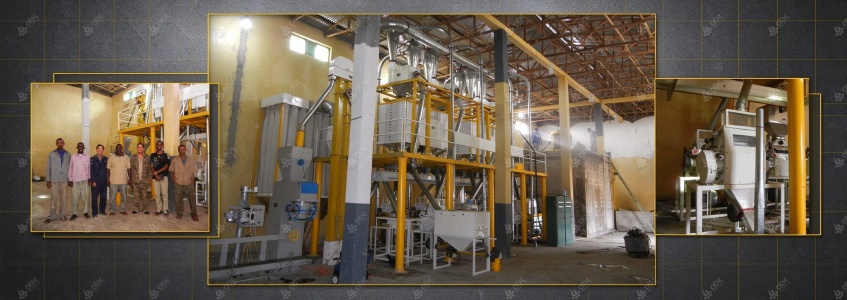
40TPD Flour Mill Production Line Workshop
2. Selection Points, Parameters and Configuration Differences
2.1 Reference Parameters
Installed power for this flour milling machinery is typically 80 to 90 kW, excluding civil works and site lighting. The building is normally a three-storey steel structure arranged for gravity flow, with no pneumatic lifting, and the layout follows the same logic as a custom plant design. The figures below can be used directly for feasibility work and for comparing quotations.
Table 4 Reference parameters
|
Item |
Reference |
Note |
|---|---|---|
| Daily throughput | 40 t raw wheat per 24 h | 2.0 t/h over a 20-hour shift |
| Flour output | about 29 to 30 t per day | At 72% to 76% extraction |
| Extraction rate | 72% to 76% | Varies with wheat, diagram and grade |
| Product range | Premium flour, standard flour, bran | Blending bins add grades |
| Installed power | 80 to 90 kW | Cleaning, milling, sifting, packing, dust collection |
| Building | Three-storey steel structure | Height set by spouting angle and machine height |
| Tempering time | 18 to 24 hours | Moisture set against wheat type |
The 72% to 76% extraction range is an industry norm, not a guarantee. The same equipment can move two points on a different grist, which is why the target belongs in the contract rather than in the argument at acceptance. A flour mill project report written before purchase should state it for the same reason. The same layout serves a small flour mill of 20 t/d and a mini flour mill of 10 t/d; what changes is the machine count, not the principle.
2.2 Standard Versus High-Spec Configuration
Table 5 Configuration differences
|
Item |
Standard |
High-spec |
|---|---|---|
| Purifier | Not fitted | Fitted, raises premium flour yield |
| Blending system | None | Automatic blending, stable multiple grades |
| Control | Simple local control | Full PLC with central control |
| Packing | Manual assistance | Automatic scale with conveying |
| Best for | Commodity flour, capital first | High grade, stable batch requirement |
| Cost and labour | Lower capital, more labour | Higher capital, less labour |
The choice is not about budget, it is about what the wheat flour mill sells. Local staple flour sold in bulk is served by the standard configuration; branded bagged flour with batch consistency needs the purifier and the blending system, because they decide whether one grist produces one grade repeatably.
2.3 Procurement Pitfalls
-
Explosion protection. Specify equipment conforming to dust explosion protection standards, with venting and antistatic design on the filter. This cannot be added at acceptance; it means replacing equipment.
-
Food contact materials. Food-grade material, commonly 304 stainless, on every surface touching flour; coated parts are not used on direct contact surfaces.
-
Wear parts. Roll chills, sieve frames, brushes and airlock blades are consumables. Confirm specifications, prices and lead times at the order stage rather than at failure.
-
Duct seals. Flange gaskets, flexible connections and inspection door seals are not the place to save; the saving is repaid in downtime.
-
Configuration against price. Compare model, capacity, power and quantity line by line. Comparing totals alone always hides omissions.
Flour mill machinery cost is driven by four things rather than one: the number of passages, the number of cleaning stages, the degree of automation, and the scope of civil and steel work. Two offers for the same tonnage can differ by a third on those four lines alone, which is why flour mill cost cannot be compared as a single number.
Compliance comes before cost. Explosion protection and food-contact material admit no compromise, and both are fixed by the specification rather than negotiated at the end. The remaining three items on the list above are running cost, and asking about them at the order stage saves substantial downtime later.
Further reading: the wheat milling process, the essential wheat processing steps, starting a wheat flour plant, a 20 t/d line configuration, and investment and the flour mill business plan.
Why ABC Machinery as Your Flour Mill Business Partner?
Once the equipment list is settled, one question remains: who carries responsibility for the whole line. A trader sells machines; a manufacturer sells the assurance that the machines will produce the rated output. The difference appears gradually after the contract is signed.
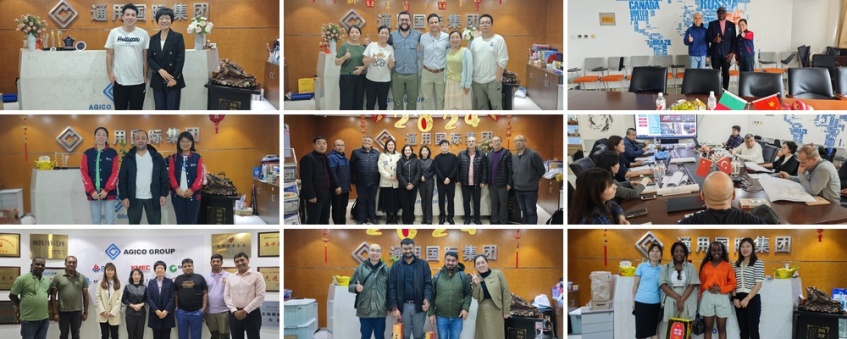
Customers Inspect Wheat Flour Mill Line
3.1 Manufacturer, Single Point of Responsibility
ABC Machinery manufactures wheat flour milling equipment and a full range of grain milling machines, and integrates complete lines, with process design, equipment manufacture and site commissioning handled by one team. The practical benefit is not price but undivided responsibility: when output falls short, there is no space for the machine supplier to blame the ducting and the ducting contractor to blame the machines.
-
Machines and integration. Roller mills, plansifters, cleaning and conveying equipment manufactured and integrated in-house.
-
Bought-in components. Motors, gearboxes, bearings and electricals to the brands named in the contract, with documentation.
-
Scope. One contract covering design, manufacture, shipment, installation, commissioning and training.
3.2 Three Contract Modes
Table 6 Contract modes and delivery boundaries
|
Mode |
Suited to |
Boundary |
|---|---|---|
| EPC turnkey | Investors, new plants, buyers wanting one party accountable | Process design through performance test, including installation and training |
| Equipment supply | Buyers with their own civil and installation teams | Equipment delivered, installation guidance, commissioning support |
| Single machine | Existing lines needing one section upgraded | Machine delivery and interface parameters |
The modes differ in who carries the risk, not in quality. A new plant takes EPC so that schedule and output risk sit with one party; an existing building with its own crews is better served by equipment supply; a single weak section is fixed fastest by one machine. Buyers comparing flour mills for sale across suppliers usually discover that the price gap follows this boundary more closely than it follows the tonnage.
3.3 Delivered Projects
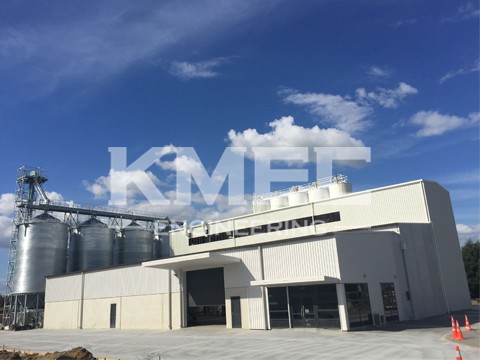
Complete lines have been delivered to a number of markets. The two most relevant to this configuration are the 40 t/d plant in Ethiopia and the 150 t/d plant in Bangladesh; further lines are running in New Zealand, Zambia, Sri Lanka and Algeria.
Those markets also show how the same grain milling machinery is described differently. In South Asia the same configuration is often called an atta flour mill, and in East Africa a wheat milling machine of this size is usually bought as a complete line with cleaning and packing included. What the projects share is not size but delivery method: one installation team stays until output is verified, then hands over.
3.4 After Handover
-
Installation and commissioning. A dedicated crew works through no-load, load and continuous running.
-
Training. Millers, tempering operators and electricians trained separately, with operating procedures and as-built documents handed over.
-
Spare parts. Roll chills, sieve frames and airlock blades held against a list to shorten downtime.
-
Communication. Enquiries accepted in English, Spanish, Russian, French and Arabic, answered within one business day.
The flour miller who runs the plant afterwards is the person the training is really for. A line handed over with documents but without a trained miller will be run at whatever rate the operator is comfortable with, which is rarely the rated rate.
We receive enquiries in English, Español (Spanish), Русский язык (Russian), Français (French) and العربية (Arabic). Our professional team will reply to you within one business day. Please feel FREE to contact us!