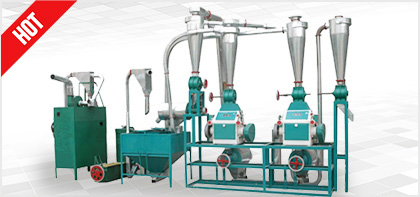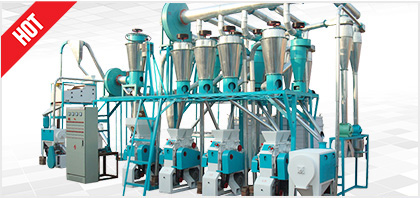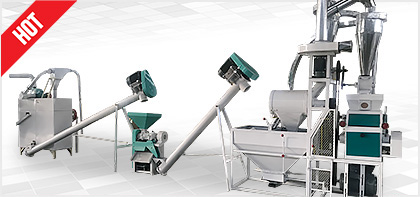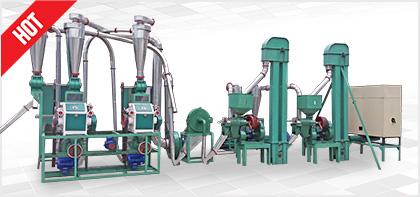
50 TPD Flour Mill Plant
TPD stands for tonnes per day, and in a 50 TPD flour mill plant it refers to raw wheat processed, not flour produced. At a 72% to 76% extraction rate, 50 tonnes of wheat yield about 36 to 38 tonnes of flour, with bran and middlings making up the balance; on a 20-hour effective shift the line has to deliver 2.5 t/h. That distinction belongs at the front of any enquiry, because a buyer who sizes a plant for "50 tonnes of flour" ends up one full class short, delivers less than expected for years, and cannot identify which machine is responsible.
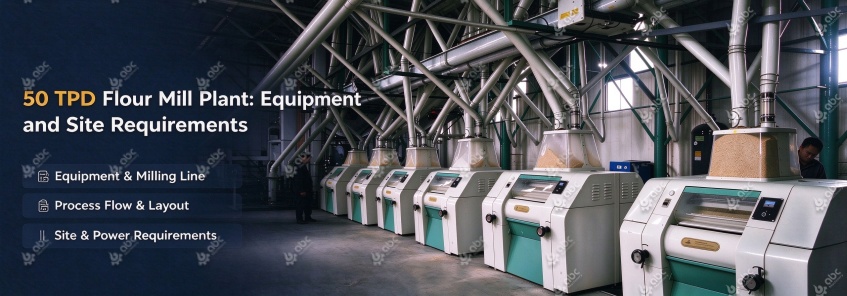
This tonnage sits in the small-to-medium band. Below it are 10 to 30 TPD country units; above it are commercial flour mill projects of 100 TPD and more. 50 TPD is an awkward middle: it already needs a proper multi-storey steel structure and a designed mill flow, but it does not yet justify a fully automated central control room. Three kinds of buyer end up here — a township processing plant, a grain cooperative, and a small flour mill building a regional brand. After reading this article, a buyer should be able to look at a flour mill machine list and say what is missing and which line is padding.
Complete Flour Mill Equipment List, Section by Section
The plant divides into five sections, and a missing section means no production line. The overview table comes first, then each section in turn.
Table 1. Overview of a 50 TPD equipment set
|
Section |
Main equipment |
50 TPD reference |
|---|---|---|
| Wheat cleaning | Pre-cleaner, gravity destoner, scourer, magnetic drum, damperer, tempering bins | Destoner 2 in parallel; tempering 2 bins |
| Milling | Core wheat flour machinery: roller mills, plansifters, purifiers, bran finisher | 9 to 10 roller mills; 3 to 4 plansifters |
| Conveying, dust and control | Bucket elevators, screws, pneumatic lines, pulse jet filters, PLC cabinet | Sized on suction points and circuit count |
| Packing | Net weighing scale, bag closer, finished flour bins, bran packing | Scale rated 120 bags/h or more |
| Support | Laboratory instruments, fire and explosion protection | To local acceptance requirements |
Wheat Cleaning Section
Cleaning is the only section in the building that subtracts. It takes out what is not wheat and brings the wheat to a condition the rolls can work with. Every grain milling machine downstream inherits its failures: grooved flutes, blocked sieve frames and out-of-specification ash all trace back here, and none of them look like a cleaning problem once they appear.
-
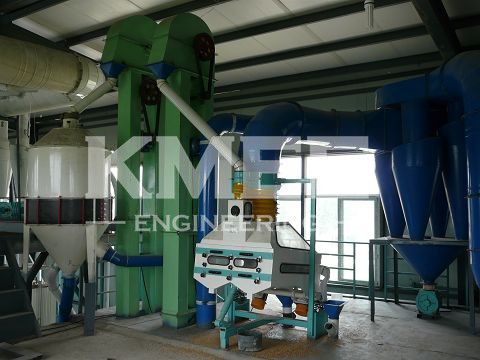
Vibrating pre-cleaner: removes straw, large and light impurities on two sieve decks. Sized at 1.2 to 1.5 times 2.5 t/h, which is 3.0 to 3.75 t/h.
-
Gravity destoner: removes stones of similar density to wheat. Our TQSF40 covers 1.5 to 2.5 t/h, and a 50 TPD plant on a 20-hour shift needs exactly 2.5 t/h, so two units in parallel — each at 1.25 t/h and 50% load — is the safer arrangement, and it allows maintenance without stopping the line.
-
Wheat scourer: cleans brush hair, surface dirt and part of the damaged kernels. Intensity is adjustable; the broken kernel rate is what to watch, because broken wheat costs both extraction and flour colour.
-
Magnetic drum: removes tramp iron and protects flutes and sieve frames. Two points, one after scouring and one before first break.
-
Damperer and tempering bins: 18 to 24 hours of tempering, with each bin sized for 8 to 12 hours of throughput, or 20 to 30 tonnes. Two bins on rotation let one temper while the other fills, so production never pauses.
-
Conveying: bucket elevators, airlocks and feeders, interlocked with the main machines so any blockage stops the upstream section immediately.
-
Dust network and pulse jet filter: suction at intake, pre-cleaning, destoning and scouring. Specify the explosion-rated version with relief vents and antistatic bags. Where two destoners run in parallel, each branch needs its own damper, or one machine pulls hard while the other barely draws.
Tempering looks like a side issue and is not. The water addition follows a formula: water = dry wheat weight x (target moisture minus original moisture) divided by (100 minus target moisture). Bringing 100 kg of wheat from 12% to 16% takes 4.76 kg of water. Hard wheat is normally tempered higher and soft wheat lower, and the actual figure has to be measured and set during commissioning against the wheat and the local climate rather than copied from a table.
Milling Section
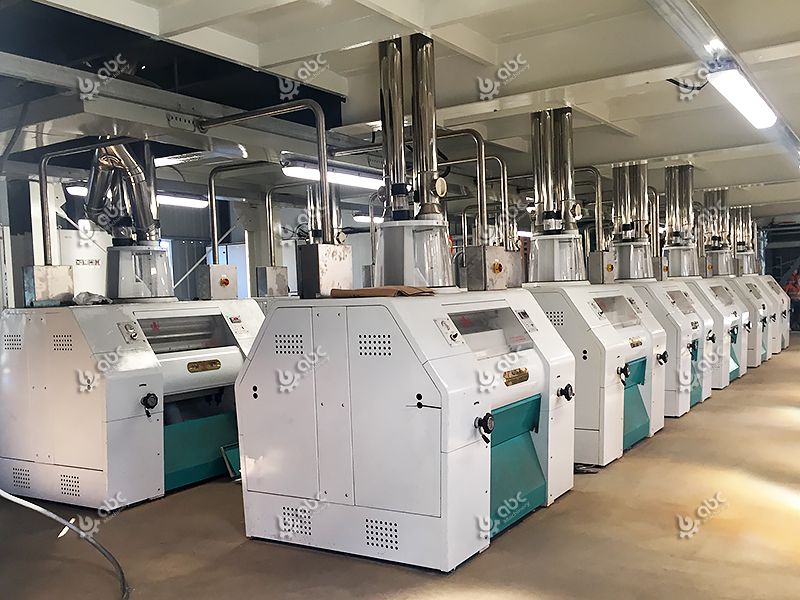
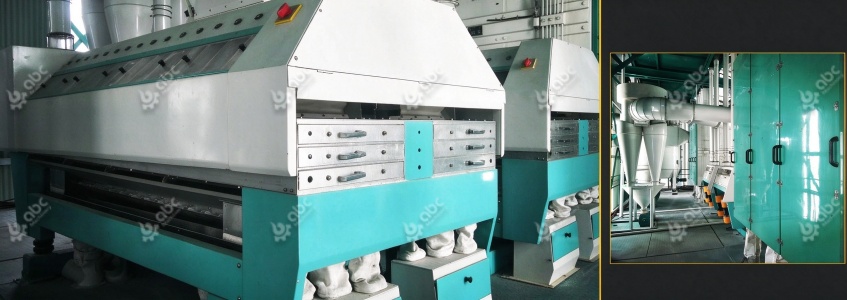
The roller mill is the most expensive single machine on the line and the one that sets capacity. The count is calculated rather than chosen: a 2.5 t/h duty at 20 hours needs 18,000 to 20,000 mm of roll contact length, and one roller flour mill of the FMFQ10x2A type carries two pairs of 1,000 mm rolls, or 2,000 mm, which gives 9 or 10 machines.
-
Roller mills, 9 to 10: break rolls open the wheat, reduction rolls grind intermediate stock, scratch rolls handle bran-bearing stock. Flute profiles and roll gaps differ between the three duties and cannot be interchanged; the count is allocated by passage.
-
Plansifters, 3 to 4: grading and flour dressing. Sieve area has to match roll output — too little and the mills are throttled, too much and fine flour recirculates while power consumption climbs.
-
Purifiers, 2 to 3 (premium version): grade intermediate stock by quality and directly determine high-grade yield. Omitted in the economy version.
-
Bran finisher, 1 to 2 (optional): recovers flour still attached to bran, raising extraction and lowering the flour content of the bran.
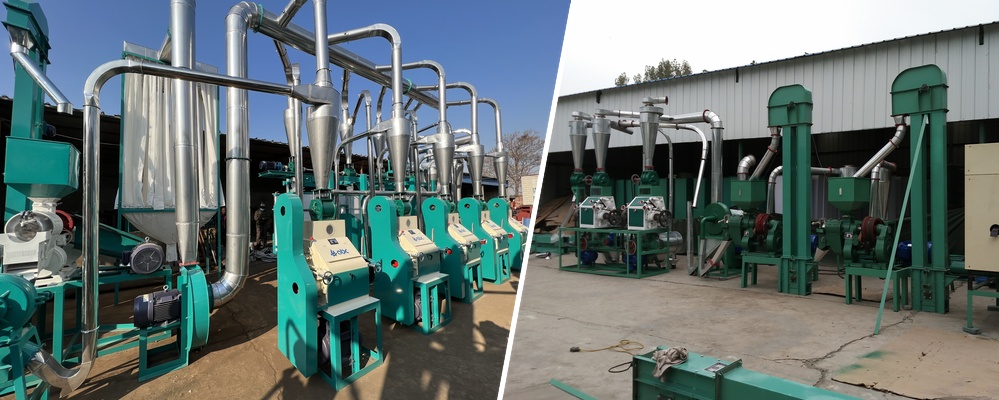
The plansifter and the roller mill are the pair most often mismatched. A list reads "roller mills, 9 units" and "plansifters, 3 units", and both numbers look reasonable in isolation. Whether they work together depends on the ratio of total sieve area to total contact length, and whether that ratio sits in the normal band for this output.
Conveying, Dust Collection and Electrical Control
This is the invisible half of the plant. It is the easiest part to collapse into a single lump sum in a quotation, and the part most likely to cause trouble after start-up. Individual machine prices are low; how well the grain milling machinery is designed decides whether the line runs or stops.
-
Bucket elevators and screws: vertical lift between floors and horizontal transfer, interlocked with the main machines. Keep screw runs short — long horizontal runs accumulate product.
-
Pneumatic lines: for short transfers that cannot flow by gravity, never as the main conveying method. On a 50 TPD flour plant, pneumatic main conveying costs too much power and wears too fast.
-
Explosion-rated dust system: pulse jet filters with relief vents and antistatic bags, fans sized on total air volume and system resistance, ducting without long horizontal runs and with large-radius bends.
-
PLC cabinet: circuit groups by section, start from the back of the flow and stop from the front, any blockage stopping the upstream section, with an interface reserved for a control desk.
-
Distribution and explosion-proof motors: sized for 100 to 115 kW installed with 15% to 20% headroom; motors in the dust zones of cleaning, milling and packing specified for the hazardous area.
Flour is a combustible dust, so dust collection and electrical protection are safety equipment rather than environmental add-ons. GB 15577, the Chinese safety code for dust explosion prevention, sets out requirements for relief venting, antistatic construction and electrical protection. None of it can be added at acceptance testing; it can only be designed in or bought again, which is why the question belongs at quotation stage.
Packing Section
Packing sets the pace of the whole line. When the mill runs flat out and packing cannot keep up, dispatch is locked by the bagging rate, and that is the most common hidden bottleneck at 50 TPD.
-
Net weighing scale, 1 unit: 25 kg bags, net pace 100 bags/h, or one every 36 seconds. Rated capacity must reach 120 bags/h, with 20% covering bag changes, weight checks and cleaning sticky bag mouths.
-
Bag closer: interlocked with the scale, with folding and thread supply, matched to the bag type.
-
Finished flour bins: 1 to 2 days of output, buffering both bulk and bagged dispatch.
-
Bran and middlings packing: a dedicated route, never sharing a screw with flour. Bran at 50 TPD is about 12 to 14 tonnes a day, and bulk loading saves labour over bagging.
Sharing the bran route puts bran into the flour and pushes ash over the limit, and ash is the criterion that separates grades. Saving one screw and paying for it in quality complaints is a poor trade. Middlings behave the same way: invisible once blended, identified only when a batch has already shipped, and by then a flour miller is answering a customer rather than a gauge.
Wheat Flour Roller Mill for Sale
Support Flour Mill Equipment
-
Laboratory instruments: moisture meter, ash meter, whiteness meter, gluten tester. They decide whether the plant can inspect its own output, and whether it can defend itself when a customer complains.
-
Fire and explosion protection: extinguishers, water supply, antistatic earthing, electrical protection in dust zones, to local fire and safety requirements.
-
Weighing and records: intake and dispatch weighing, which is what makes the real extraction rate measurable and cost accounting possible.
Laboratory equipment is the first item dropped as optional. Without an ash meter the line between high-grade and standard flour is a matter of opinion; without a moisture meter, tempering water is added by feel. Either instrument costs far less than one rejected batch of a wheat flour machine line that could not prove its own grade.

Flour Mill Plant Site and Utility Requirements
Building Type: Steel Frame versus Single Storey
-
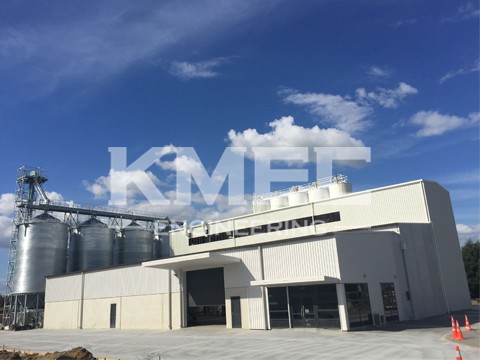
The mainstream choice for a 50 TPD flour mill plant is a three-storey steel frame in which stock falls floor by floor with no pneumatic lift. Spout angles are easy to hold, cleaning is straightforward, and adding a floor or a bay later is possible. The cost is structural: heavier steel, higher floor loading, longer civil works.
-
A single-storey shed sets the machines on one level and lifts product back up repeatedly with elevators and screws. It is cheaper and faster to build, but it adds conveying stages, raises power consumption and leaves cleaning dead spots, because the wheat milling machinery needs more elevators and screws to move product back up. Above about 30 TPD the running cost becomes visible; at 50 TPD a single-storey flour mill plant is not impossible, it simply leaves no room to expand. Before the building type is fixed, work through the order in which plant design decisions have to be made.
Building Dimensions and Floor Height
-
The published 40 TPD plant in Ethiopia occupies 24 x 7 x 7 m. A 50 TPD plant is not that footprint multiplied by 1.25: two more roller mills and an extra plansifter mean bay spacing, walkway width and roll-changing clearance all have to be re-drawn, usually adding a bay or extending the building, and every wheat flour mill machine has to be checked against the new clear height. Floor height is derived backwards from plansifter height and a 55-degree spout angle, with beam depth counted separately.
-
Final dimensions have to come off a layout drawing. Any figure quoted before that drawing exists is an estimate, and once the roof is on, changing bay spacing costs more than the equipment it was meant to house. Writing a layout freeze date into the civil contract, ahead of steel erection, is the cheapest form of insurance available at this stage.
Power Supply, Installed Load and Transformer
-
Installed power for a 50 tonne per day flour mill is roughly 100 to 115 kW. That range is derived from the published 80 to 90 kW of the 40 TPD project by capacity ratio, and covers cleaning, milling, sifting, packing and dust collection but not lighting or site services. Voltage follows the local grid: 380 V/50 Hz in most cases, 415 V/50 Hz in some.
-
Transformer capacity follows from the installed load and the load factor, and normally lands between 125 and 160 kVA with starting margin included. The 22 kW class motors on the roller mills draw an inrush current on direct starting that often decides the transformer size more than steady-state power does. Do not size the transformer as "installed power equals capacity", and do not economise on it: voltage dip shows up directly in output and in the life of the electrical gear.
Table 2. Site and utility reference conditions
|
Item |
50 TPD reference |
Note |
|---|---|---|
| Building | Three-storey steel frame, gravity flow | A shed is cheaper but leaves no room to expand |
| Footprint | 40 TPD uses 24 x 7 x 7 m | 50 TPD re-drawn around machine count; layout governs |
| Installed power | 100 to 115 kW | Scaled from 80 to 90 kW by capacity ratio, excluding lighting |
| Voltage | 380 V/50 Hz or 415 V/50 Hz | To local grid |
| Transformer | 125 to 160 kVA | Includes motor starting margin; confirmed by electrical design |
| Tempering | 18 to 24 hours | 20 to 30 t per bin, two bins on rotation |
| Process water | About 2.4 t per day | 50 t x (16-12)/(100-16), excluding cleaning and domestic use |
Water Supply and Tempering Conditions
-
Tempering uses little water but needs it to be consistent. Bringing 50 tonnes of wheat from 12% to 16% takes about 2.4 tonnes a day, and with cleaning and domestic use a supply of 4 to 6 tonnes a day is enough. What matters is quality and temperature: water high in iron dulls flour colour, and cold water in winter stretches tempering time and upsets the shift pattern.
-
Tempering bins belong indoors and insulated. Condensation on the bin wall spoils the wheat touching it, and that wheat goes into the mill and straight into the smell of the finished flour — the hardest defect to trace, because it usually surfaces as a customer complaint rather than a lab result. In northern or high-altitude locations this belongs in the civil conditions of the flour mill project, not in the operating manual.
Complete Flour Processing Machinery for Business
Procurement and Construction Pitfalls in Flour Mill Plant Project
-
Separate "50 tonnes processed" from "50 tonnes of flour". The most common and most expensive error at this tonnage. TPD counts raw wheat, so a plant that must ship 50 tonnes of flour needs 66 to 70 tonnes of intake, which moves equipment, building and installed load up a class. Put both lines into the technical annex — 50 t/d raw wheat, 72% to 76% extraction — and the argument disappears.
-
Dust explosion protection is not optional. Flour is a combustible dust; filters need relief venting and antistatic design, and electrical equipment in dust zones has to be rated for the area under GB 15577. It cannot be retrofitted at acceptance testing, only bought again, and on most lists of flour mills for sale it appears as one line reading "dust collection system" with no visible difference between a compliant and a non-compliant one.
-
Do not compare totals. Two lines of flour mill machine for sale both reading "50 TPD complete" can differ in steel weight, passage count, whether the air network was ever resistance-calculated, and how the distribution circuits are split. Check model, throughput, power, quantity and material line by line; half a day of that work routinely saves the price of a machine.
-
Choose a supplier who can deliver turnkey. Design, fabrication, installation, commissioning and training under one party leaves no room for the mill supplier to blame the air network while the network contractor blames the machines. Split contracts are where that argument starts, and on small and medium projects it is common, because no single party is accountable for the whole line.
-
Check environmental and safety approval early. Combustible dust and noise are the two usual sticking points, and both belong at site-selection stage rather than after the equipment order. Approval practice for grain processing varies by jurisdiction, so confirm the local position before signing a civil contract — the cheapest advice in this article.
Foreign Customers Visit Flour Mill Machinery Factory
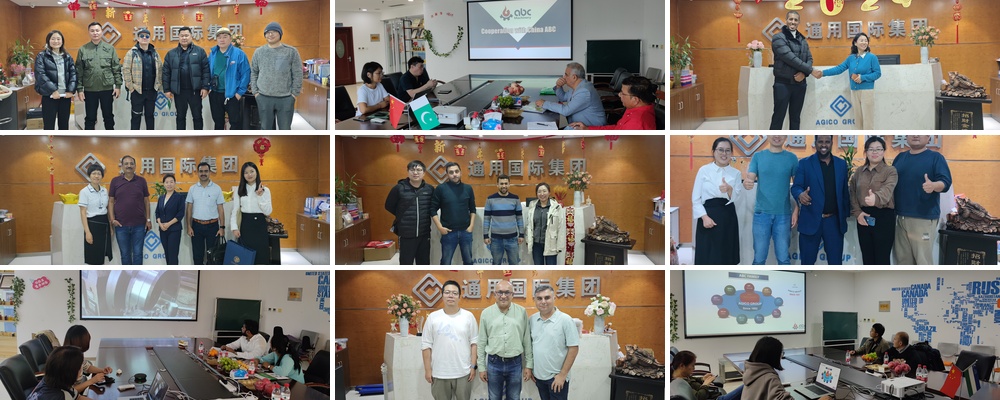
The first two points are compliance floors with no room to negotiate. The last three are about delivery capability, and asking before signing is what saves rework afterwards. ABC Machinery works at the turnkey end: process design, equipment fabrication, installation, commissioning and operator training run through one team. What we need to start is modest — a set of basic parameters (wheat type and origin, target flour grade, daily throughput, planned running hours per day) or an existing building drawing. What comes back is a specification sheet with the scope written into it, and no price list attached. A shortlist test for manufacturers is worth reading before that stage, and complete flour milling machinery by capacity is listed here.
Further reading: the wheat milling process, wheat processing steps in detail, gravity destoners for wheat, automatic flour packing scales, reconciling a wheat milling machine quotation, the business plan behind the investment, and a 20 TPD configuration for comparison.
We receive enquiries in English, Español (Spanish), Русский язык (Russian), Français (French) and العربية (Arabic). Our professional team will reply to you within one business day. Please feel FREE to contact us!