Mexico Corn Processing Plant Investment Cost: Complete Budget Guide
Building a corn processing plant in Mexico is a capital‑intensive decision, and corn processing equipment usually accounts for 40‑55% of the total investment. The difference between a 3‑year payback period and a 5‑year payback period generally depends on two choices: production capacity of the corn processing line and manufacturing equipment suppliers. This guide covers three flour‑making routes, cost structure and payback calculation — as well as how ABC Machinery supports every stage of your corn processing plant project.
Three Flour‑Making Routes for Corn Processing
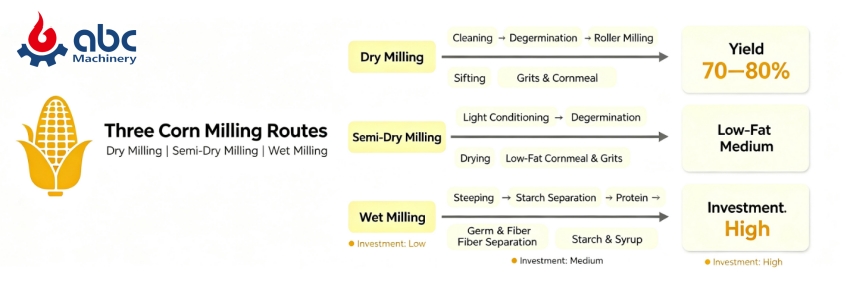
Corn processing and flour‑making technologies are generally summarized into two classic routes — dry method and wet method — yet three routes are practically operated in the market. The following three routes represent real investment options for Mexico‑based corn processing plant, with distinctly different capital thresholds.
-
Dry‑method flour milling
This route features the lowest entry‑level cost. With a short equipment chain including cleaning, degermination, roller milling and sifting, raw corn is processed into corn grits and corn flour for tortilla and snack manufacturers. Most newly‑built corn mill projects in Mexico start with this solution. The production layout is compact with short commissioning cycles. When moisture and tempering parameters are well controlled, the flour yield normally stays stable at 70‑80%.
-
Wet‑method flour milling
Corn is steeped to separate starch, protein, germ and fibre for producing industrial starch and syrup. The starch yield usually reaches 60‑70% of corn dry weight. Steeping and separation systems multiply capital requirements, so this solution is mostly adopted by large industrial groups rather than new market entrants.
-
Semi‑dry‑method flour milling
Corn is lightly tempered to 16‑18% moisture before degermination, which improves germ recovery rate and reduces oil content in finished flour. Extra tempering and drying steps push investment slightly higher than the dry route, yet it enables production of high‑value‑added products such as low‑fat corn flour and corn grits, gaining premium margins in snack and bakery market segments.
How to Start Your Own Corn Milling Business Plan
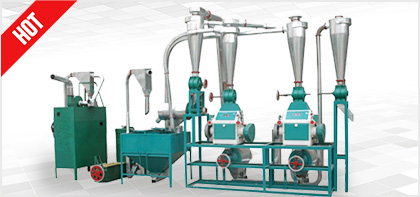
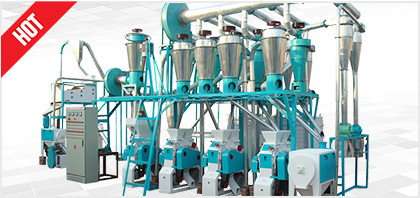
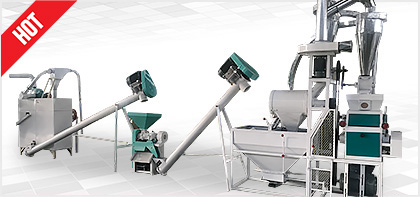
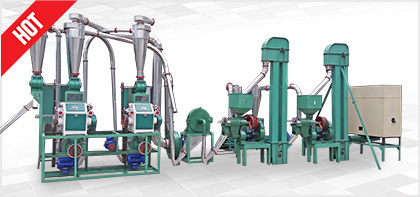
ABC Machinery adapts to dry, semi‑dry and wet corn flour‑making workflows. We supply standalone corn processing machine, complete sets of corn processing line and custom‑tailored solutions. We can make flexible configurations according to investors’ budgets, production capacities and local raw corn conditions in Mexico, covering corn‑processing projects of all scales. Not sure which flour‑making route fits your project? Click the button below, tell us your target products and output capacity; our engineers will recommend well‑matched technical routes and production lines free of charge within one working day.

How to Avoid Investment Pitfalls for Building a Corn Mill Factory
The success of a corn‑processing project relies on well‑thought‑out process design and clear investment planning. Besides hardware procurement for corn mill equipment, investors should fully evaluate civil construction, auxiliary facilities and working capital for the corn mill factory. Understanding cost composition and profit‑loss calculation logic helps you prevent capacity mismatches and objectively assess your Mexico‑located corn flour processing plant project.
Process Workflow: 5 Core Stages from Grain to Flour
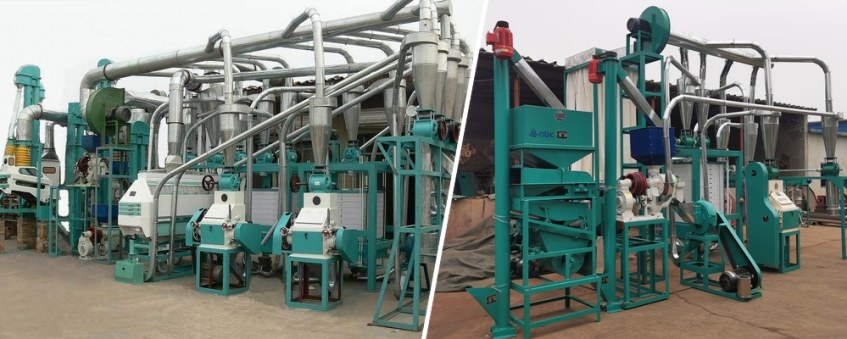
Commercial corn flour production follows five standard core procedures. Closely‑linked working steps safeguard stable operation and consistent finished‑product quality. This core advantage explains why complete integrated production lines outperform scattered standalone machines.
ABC Machinery delivers modular custom configurations based on project capacity, technical routes (dry / semi‑dry), finished‑product positioning and investment budgets for investors. We can flexibly adjust tempering moisture, milling passes, sifting fineness and automation levels. You may select simplified entry‑level setups or enhanced high‑value‑added production configurations to satisfy diverse construction demands across Mexico.
-
Cleaning
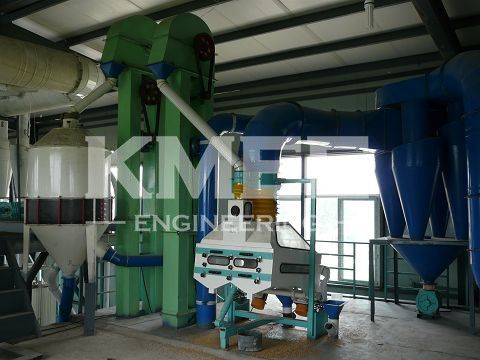
Pre‑cleaning sieves, destoners and magnetic separators remove straw, stones and metal impurities before raw materials enter the corn mill machine. Total impurity removal efficiency exceeds 99%, protecting roller surfaces and guaranteeing pure final corn mill flour.
-
Tempering and Degermination
Corn is tempered to target moisture content (14‑16% for dry process, 16‑18% for semi‑dry process) to achieve clean separation between germ and endosperm. Degerminating units collect corn germ for corn‑oil extraction, boosting economic value per ton of raw corn, which is a key segment inside the whole corn milling process.
-
Roller Milling
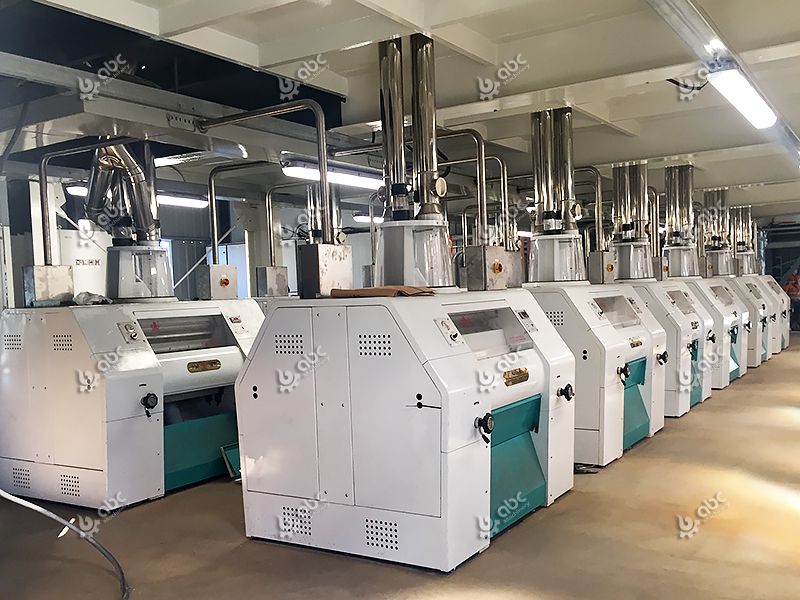
4‑6 roller‑milling passes with adjustable roll gaps and rotating speeds control particle sizes of corn grits and flour. This stage directly determines finished quality and flour extraction rate when running your corn milling plant.
-
Sifting
High‑square sifters classify materials by fineness and separate qualified corn flour mill outputs from bran and coarse particles. Typical flour yield remains at 70‑80%.
-
Pneumatic Conveying and Packing
Closed pneumatic conveying systems transfer materials from milling units to packing stations, cutting dust pollution and material handling losses. Automatic packing ensures uniform large‑batch outputs from your corn flour mill machine.
Setting up Corn MillingProduction Project for Your Business
Four Major Cost Modules of Corn Flour Processing Plant
Investment for building corn‑processing facilities covers four cost segments. Hardware investment for corn flour processing machine takes the largest share and leaves room for customized optimization. Optimize configurations based on real‑world project conditions and apply profit‑calculation formulas to evaluate overall expenditures and expected payback periods of your corn flour processing plant.
|
Cost Module |
Percentage of Total Investment |
Core Description |
|---|---|---|
|
Equipment Cost |
40%-55% |
Includes main flour‑making lines, material conveying systems and full automatic packing units; this segment offers the biggest room for negotiation and customized optimization |
|
Workshop & Civil Works |
15%-25% |
Covers steel‑structure plant construction, equipment foundation works and floor load‑bearing reconstruction and other infrastructure projects |
|
Utilities & Installation |
10%-15% |
Contains electrical supporting systems, water supply, compressed air, dust‑removal environmental‑protection systems plus equipment installation and commissioning expenses |
|
Working Capital |
15%-20% |
Funds raw‑material stock procurement, packing‑material reserves, pre‑operation salaries and other upfront operating expenditures |
Payback Calculation Formulas
-
Annual Gross Profit Formula: Annual Gross Profit = Daily Processing Capacity × Annual Equipment Operating Rate × Gross Profit Per Ton of Processing − Total Annual Operating Costs.
-
Payback Period Formula: Payback Period = Total Project Investment ÷ Annual Net Cash Flow.
The above‑mentioned investment ratios, payback cycles and flour yield data are sourced from real‑world operating conditions and market research samples of regular Mexican corn‑processing projects. They serve only as investment reference and shall not constitute investment promises or profit guarantees. Actual payback cycles, capital inputs, capacity‑linked revenues are subject to local raw‑material price fluctuations, site conditions, market supply‑demand balance, operating rate, operation management, policy taxes and other variable factors, so individual project differences exist. All final project calculations shall be subject to customized implemented solutions.
Why Choose ABC Machinery as Your Corn‑Processing Equipment Supplier
Selecting a complete‑line supplier or component assembler will decide whether your plant runs at 85% or 60% utilization rate. ABC Machinery’s full sets of production lines comply with CE electrical standards and are manufactured under ISO 9001 quality‑management system. Every complete line undergoes pre‑shipment testing. We have delivered turn‑key grain‑processing projects for clients in New Zealand, Chile, Zambia, Argentina, Indonesia, Ethiopia, Colombia and other regions. Inquiries are supported in English, Spanish, Russian, French and Arabic — ABC Machinery communicates in your project’s preferred language.
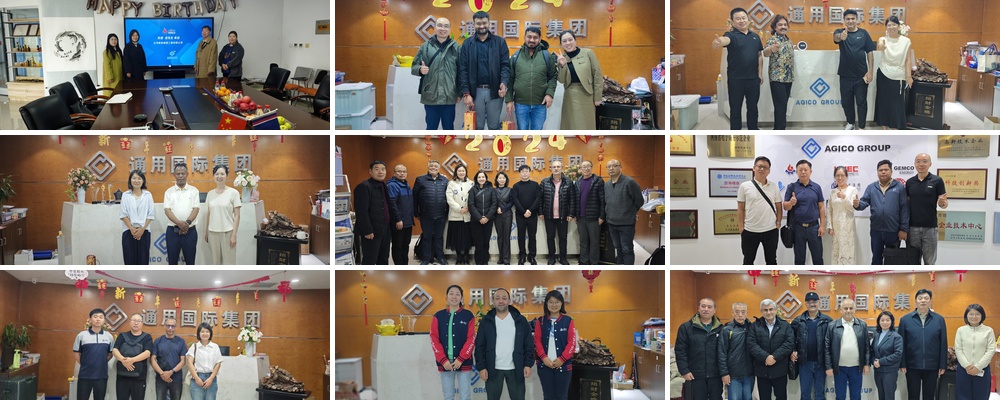
Global Flour Milling Machine Investors Visiting ABC Machinery
If you are planning to build a corn processing plant in Mexico and want updated equipment specifications and budget estimation, feel free to get in touch with us. Our professional team will reply within one working day with production‑line configurations, custom‑tailored project proposals and payback analysis. This is your free starting point for Mexico‑based investment supported by real‑world data instead of generic price lists.
We receive enquiries in English, Español (Spanish), Русский язык (Russian), Français (French) and العربية (Arabic). Our professional team will reply to you within one business day. Please feel FREE to contact us!