How to Build a Wheat Flour Milling Plant in Brazil
Brazil stands as South America’s largest wheat‑importing and flour‑consuming market, with annual wheat imports exceeding 6 million tons. Stable market demand from baking, pastry and pasta industries keeps flour consumption rising. At present, large‑scale wheat flour milling plant facilities in Brazil are running at full capacity, while medium‑size production capacity of 20‑100 t/24h remains scarce, creating a viable entry point for foreign investors to build a new wheat flour milling plant. This article presents the complete end‑to‑end construction workflow for a Brazilian wheat flour milling plant, serving as reference for new‑comers on project initiation, budgeting, project filing and equipment procurement.
Classification of Wheat Raw Materials for Brazil (Must‑know for Plant Construction)
Domestic wheat output in Brazil is limited. Flour production mainly relies on imported wheat from Argentina and Paraguay, supplemented by locally‑grown wheat from southern Brazil. Final flour quality heavily depends on wheat blending ratios. Six mainstream wheat varieties fit different end‑products:
|
Variety |
Typical Protein Content |
Main Application |
|---|---|---|
|
Hard Red Spring (HRS) |
13‑15% |
Bread and bakery flour |
|
Hard Red Winter (HRW) |
11‑13% |
General‑purpose bread flour, multi‑purpose flour |
|
Soft Red Winter (SRW) |
8‑10% |
Cakes, biscuits and pastries |
|
Hard White Wheat (HWW) |
High‑protein, light colour |
Asian‑style noodles, whole‑wheat flour |
|
Soft White Wheat (SWW) |
Low‑protein |
Cake flour, crackers, breakfast cereals |
|
Durum Wheat |
Highest hardness |
Semolina, pasta production |
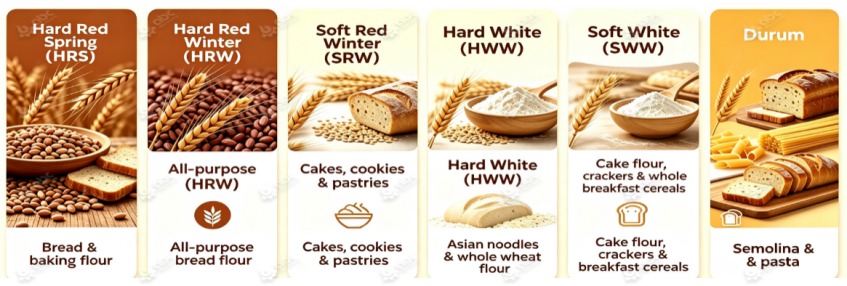
Different Type of Wheat Flour Usage
Most mainstream wheat flour mill factory in Brazil adopt mixed‑wheat blending processes. By combining hard and soft wheat, operators balance flour yield, whiteness and gluten strength while controlling production costs. If you are seeking reliable mechanical equipment for your wheat processing plant project, click the button below to get a free custom quotation from ABC Machinery. Tell us your capacity requirements for the wheat flour production process, and our engineers will reply free‑of‑charge within 24 hours.

5 Steps to Build a Flour Mill Plant in Brazil
Constructing a wheat flour mill plant in Brazil differs greatly from other regions. The local power grid runs at 60 Hz, the climate is hot and humid, food hygiene regulations are strict, and raw materials are highly dependent on imported wheat. Below is a five‑step implementation solution tailored for the Brazilian market to help investors of wheat flour mill plant avoid common industry pitfalls and achieve fast commissioning and profitable operation.
Market statistics, process parameters and compliance requirements in this article are for public reference only. Local Brazilian market conditions, policies & regulations and power‑grid specifications are subject to change. For actual investment, plant construction and compliance procedures, please consult local Brazilian tax, legal and food‑compliance advisors according to your own situation. This content does not constitute investment advice.
Confirm Production Capacity and Business Model
For a wheat flour mill, never purchase wheat processing machine before securing sales channels. Three proven business models are available in Brazil, matching fixed capacity ranges for your wheat flour production:
-
Startup asset‑light model|20‑30 t/24h
Supply local bakeries and retail stores under your own brand. Low investment and fast capital turnover. Requires local sales networks and suits first‑time investors for wheat flour mill business.
-
Stable toll‑processing model|30‑50 t/24h
Provide toll‑milling services for grain traders. Revenue is calculated per ton of processed grain. Stable income with no need to handle sales or grain sourcing.
-
Large‑volume supply model|50‑100 t/24h
Cooperate with food factories and large‑scale baking enterprises. Large‑volume stable orders bring higher profit margins yet require longer negotiation cycles.
Standardized parameters for medium‑sized Brazilian wheat milling plant, adapted to local power supply, workshop and warehouse standards:
| Capacity | Mill Stands | Workshop Area | Installed Power | Wheat Silo Capacity |
|---|---|---|---|---|
| 20‑30 t/24h | 2‑3 units (250 mm rolls) | 300‑500 m² | 90‑130 kW | 100‑150 t |
| 50 t/24h | 4‑5 units (250 mm rolls) | 600‑900 m² | 180‑250 kW | 200‑300 t |
| 100 t/24h | 6‑8 units (250 mm rolls) | 1,000‑1,500 m² | 320‑450 kW | 400‑600 t |
Four Core Site‑Selection Criteria for Brazil (Localization Key)
-
Logistics location: Prioritize sites close to harbours or grain distribution hubs to greatly cut transportation costs for imported wheat.
-
Power compatibility: Brazil uses a 60 Hz grid. Conventional 50 Hz imported wheat mill machine needs frequency‑conversion retrofitting. Confirm transformer capacity before contract signing.
-
Climate‑adapted workshop: Due to Brazil’s high temperature and humidity, the wheat flour plant workshop must implement ventilation, humidity control and roof heat insulation to prevent wheat dampening and flour caking.
-
Local labour resources: Recruit mechanical and electrical operators nearby to reduce downtime & maintenance costs for your wheat mill.
Reference layout for your wheat flour mill plant layout: raw grain receiving area → wheat cleaning area → milling area → packing area → finished‑product warehouse. Adopt one‑way material flow to lower cross‑contamination risks.
Standard Process and Equipment Configuration (Determines Final Flour Quality)
Complete workflow for the wheat mill process: Grain Receiving → Wheat Tempering → Roller Milling → Sifting → Packing
-
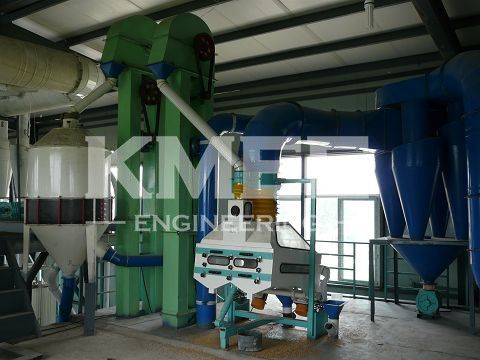
Wheat cleaning stage: Apply pre‑cleaning sieve, air separation, destoning, wheat scouring and magnetic separation. Reduce foreign‑matter content in incoming grain from above 2% to below 0.5%, with heavy impurity residue controlled within 0.1%.
-
Critical tempering stage: Stabilize moisture before milling at 15.5‑16.5%, hold for 16‑24 hours; extend tempering time for hard wheat. Proper tempering keeps flour yield at 72‑78% and lowers ash content to 0.45‑0.65%. Skipping tempering will cause sharp yield drops, dark‑coloured flour and sub‑standard product quality.
-
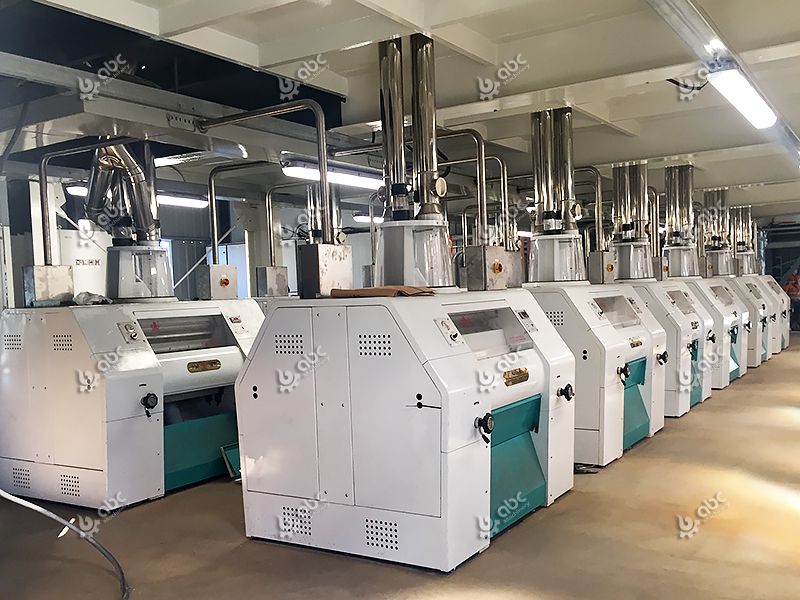
Milling & automation: 250 mm roller mill units perform break‑system husk removal and reduction‑system flour extraction, combined with high‑square sifters and purifiers for grading and purification. PLC centralized control enables single‑operator monitoring of the whole wheat flour mill process.
Mandatory Compliance Checklist for Brazilian Plant Construction (Common Pitfalls for New Investors)
Food‑processing plants in Brazil face strict compliance requirements:
-
CNPJ tax registration.
-
ANVISA food‑health registration.
-
Compliant product labelling.
-
Fire‑safety & environmental permits.
Reminder: Actual administrative requirements are subject to the latest rules from local Brazilian authorities. Hiring local compliance consultants is strongly recommended.
Installation, Commissioning and Team Training
A standard 50‑ton wheat flour mill machine production line requires 4‑6 weeks for installation and 1‑2 weeks for commissioning. Three key pre‑conditions for successful startup: civil foundations, steel structures and power‑distribution systems must be completed in advance; maintain sufficient spare‑parts stock for mill rolls, screens, belts and bearings; supply complete Portuguese‑language operation manuals plus hands‑on on‑site training to ensure local operators can run production steadily, control quality and sustain target flour yield.
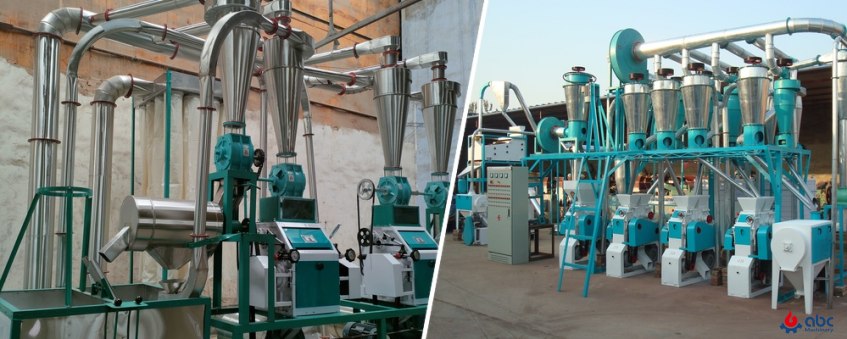
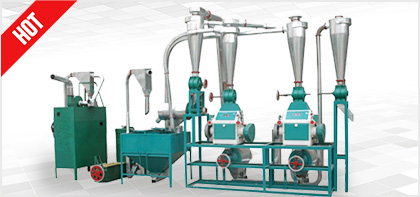
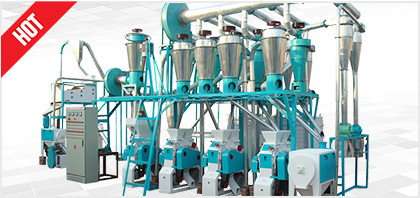
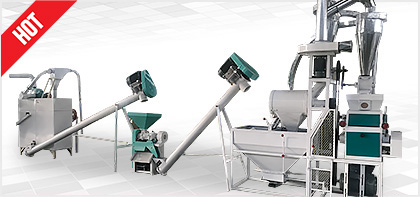
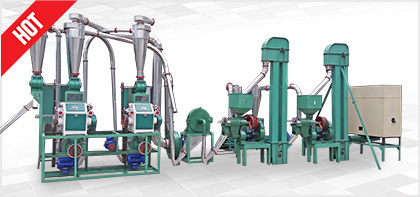
Complete Wheat Flour Mill Manufacturing Line for Sale
Why Choose ABC Machinery for Your Brazilian Wheat Flour Mill Project
ABC Machinery delivers full turn‑key solutions for Brazilian wheat flour mill plant. Our scope covers process design, custom‑built wheat machinery, wheat flour mill plant layout, shipment & customs clearance, overseas installation & commissioning, localised operator training and after‑sales spare‑parts supply. We realise genuine one‑stop project delivery.
Global Flour Milling Machine Investors Visiting ABC Machinery
With years of experience exporting grain‑processing equipment, our completed wheat flour mill business projects cover Brazil, Argentina, Paraguay and other South‑American nations, alongside Africa, Southeast Asia, Central Asia and further global markets. We hold extensive practical overseas project experience, well‑versed in diverse grid standards, climate conditions and food‑compliance policies worldwide, delivering reliable execution with low project risks.
|
Phase |
Deliverables for You |
|---|---|
|
Inquiry & Process Design |
Free process proposal: capacity configuration, equipment list and wheat flour mill plant layout suggestions |
|
Order Confirmation & Manufacturing |
Detailed technical agreement, production schedule and FOB / CIF quotation |
|
Shipment & Customs Documentation |
Complete shipping documents, packing lists and technical certificates for customs clearance |
|
Installation & Commissioning |
On‑site engineer supervision; commission until full nominal capacity is achieved |
|
Training & After‑sales |
Operational training, Portuguese‑language manuals and spare‑parts supply |
Send your target capacity and plant‑site information to our engineers, and receive obligation‑free free‑of‑charge process design, wheat flour machine configuration and installation timeline proposals.
We receive enquiries in English, Español (Spanish), Русский язык (Russian), Français (French) and العربية (Arabic). Our professional team will reply to you within one business day. Please feel FREE to contact us!